|
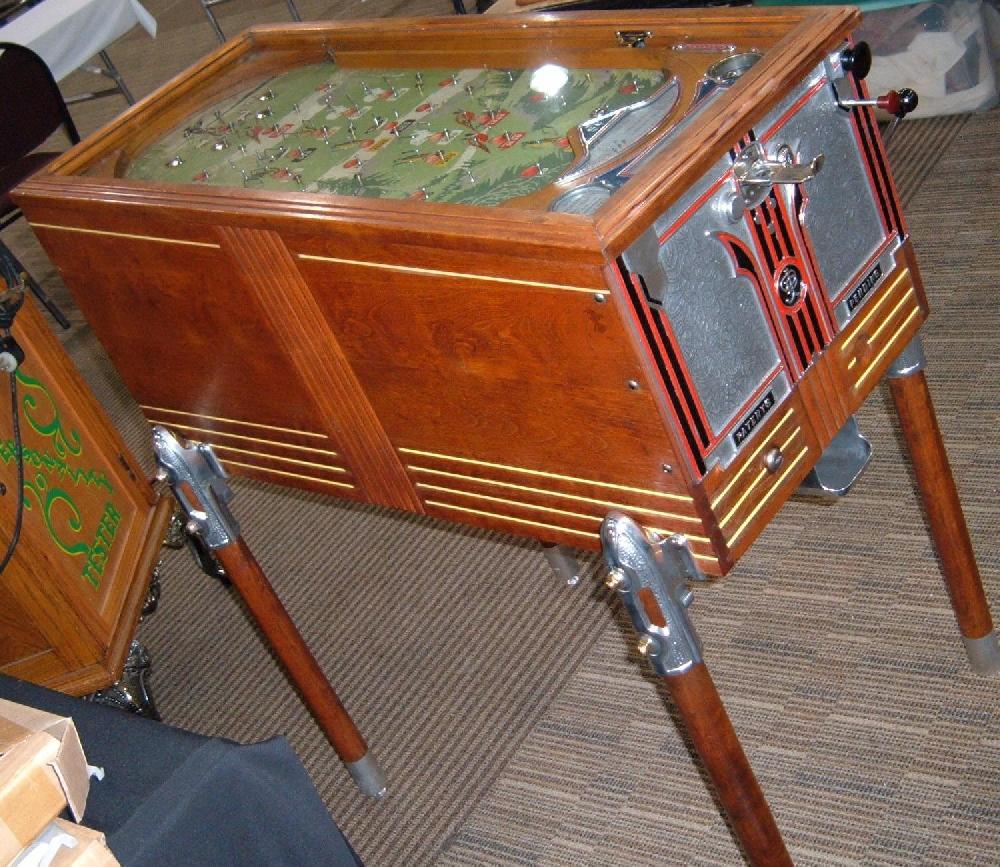
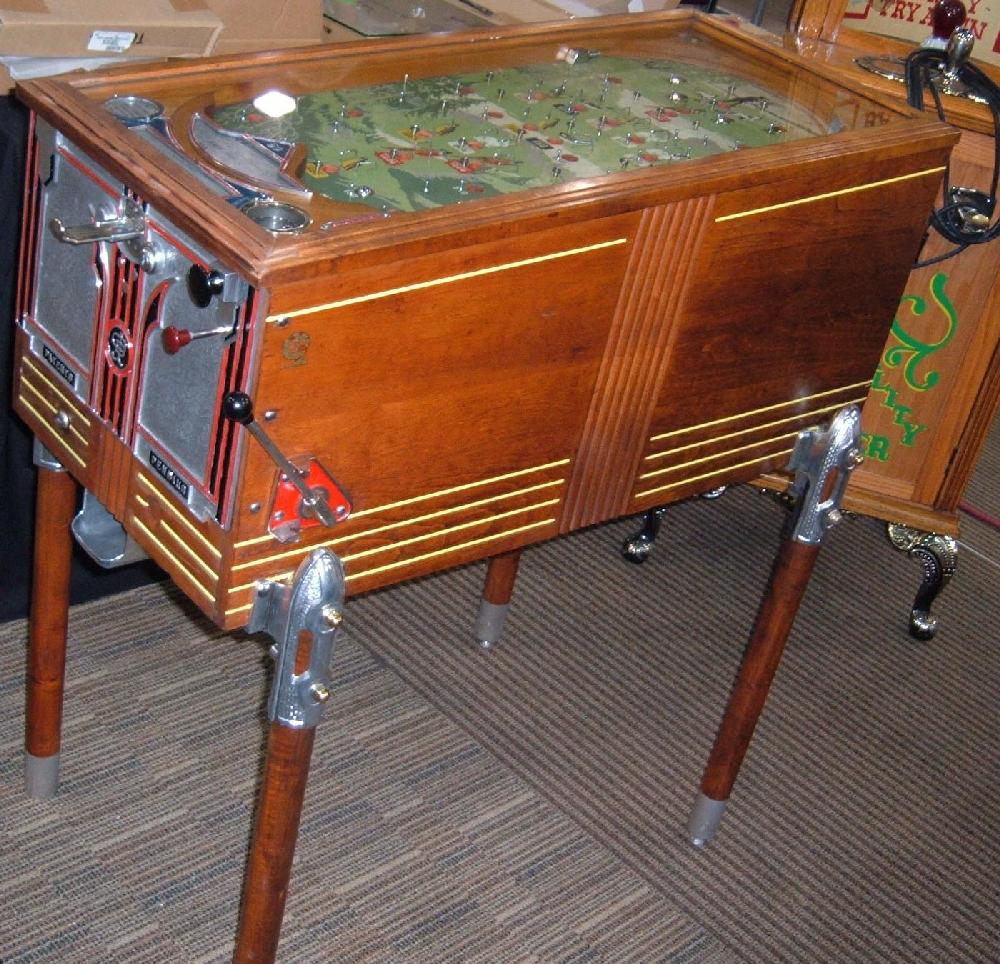
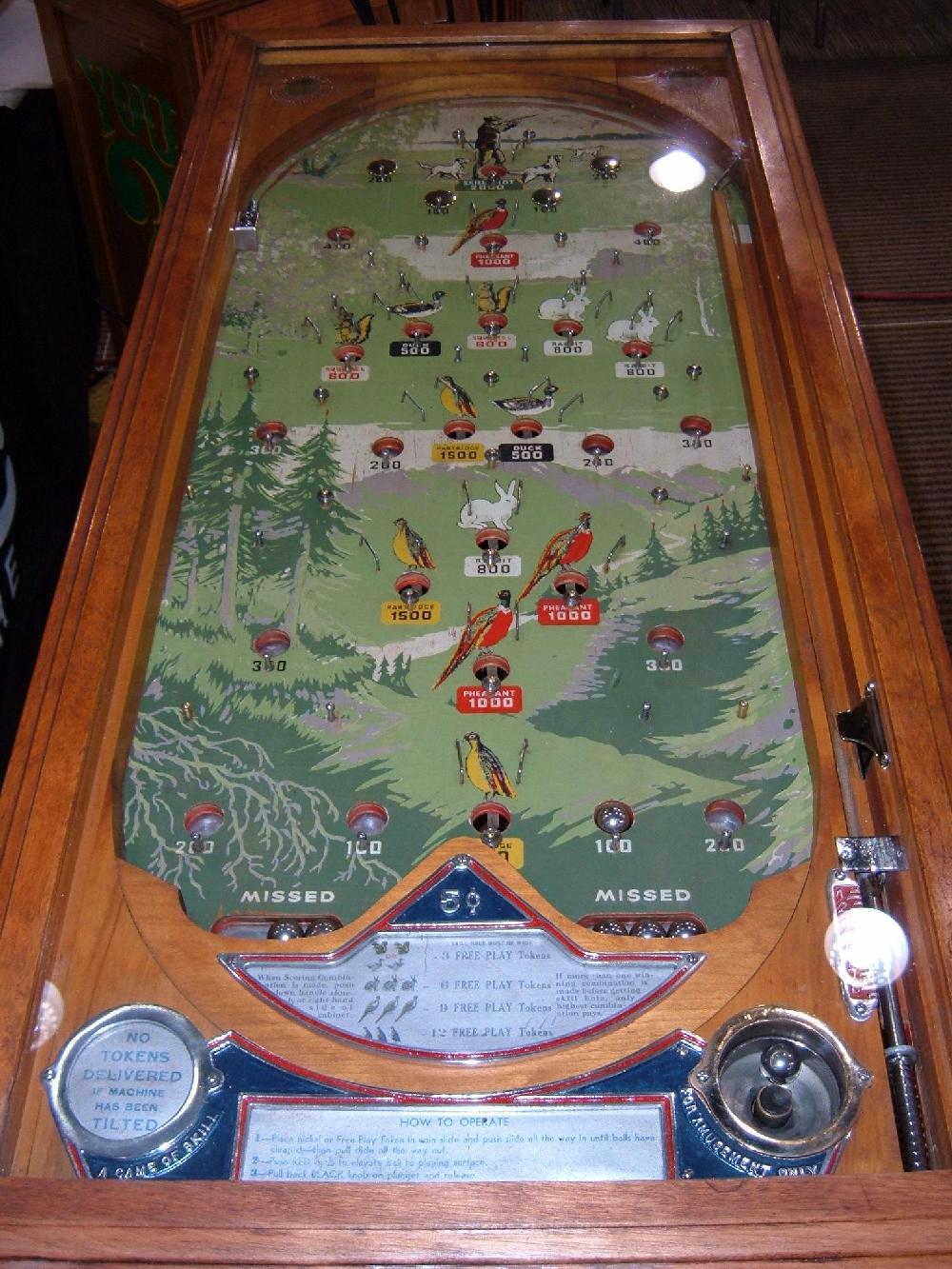
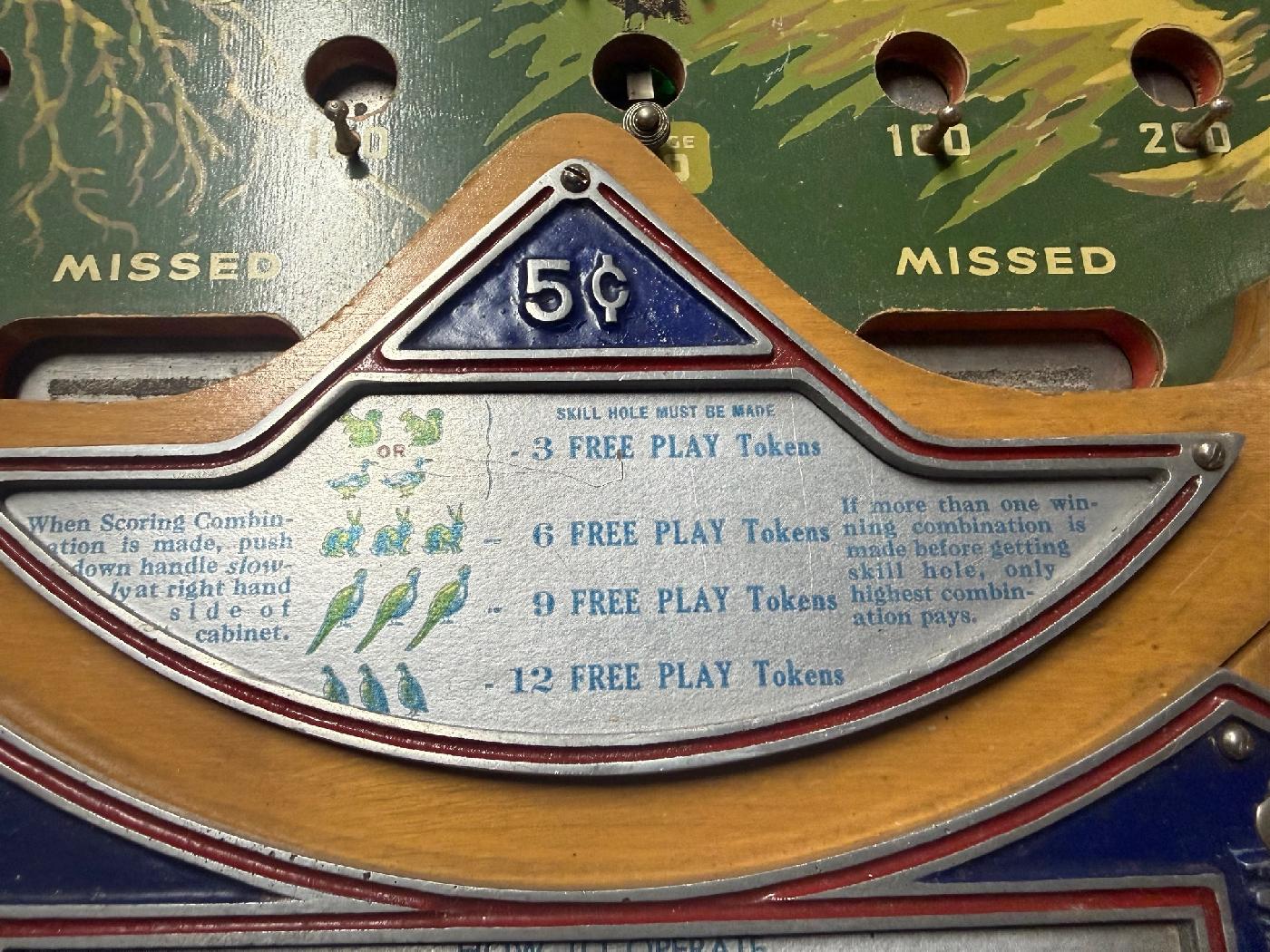
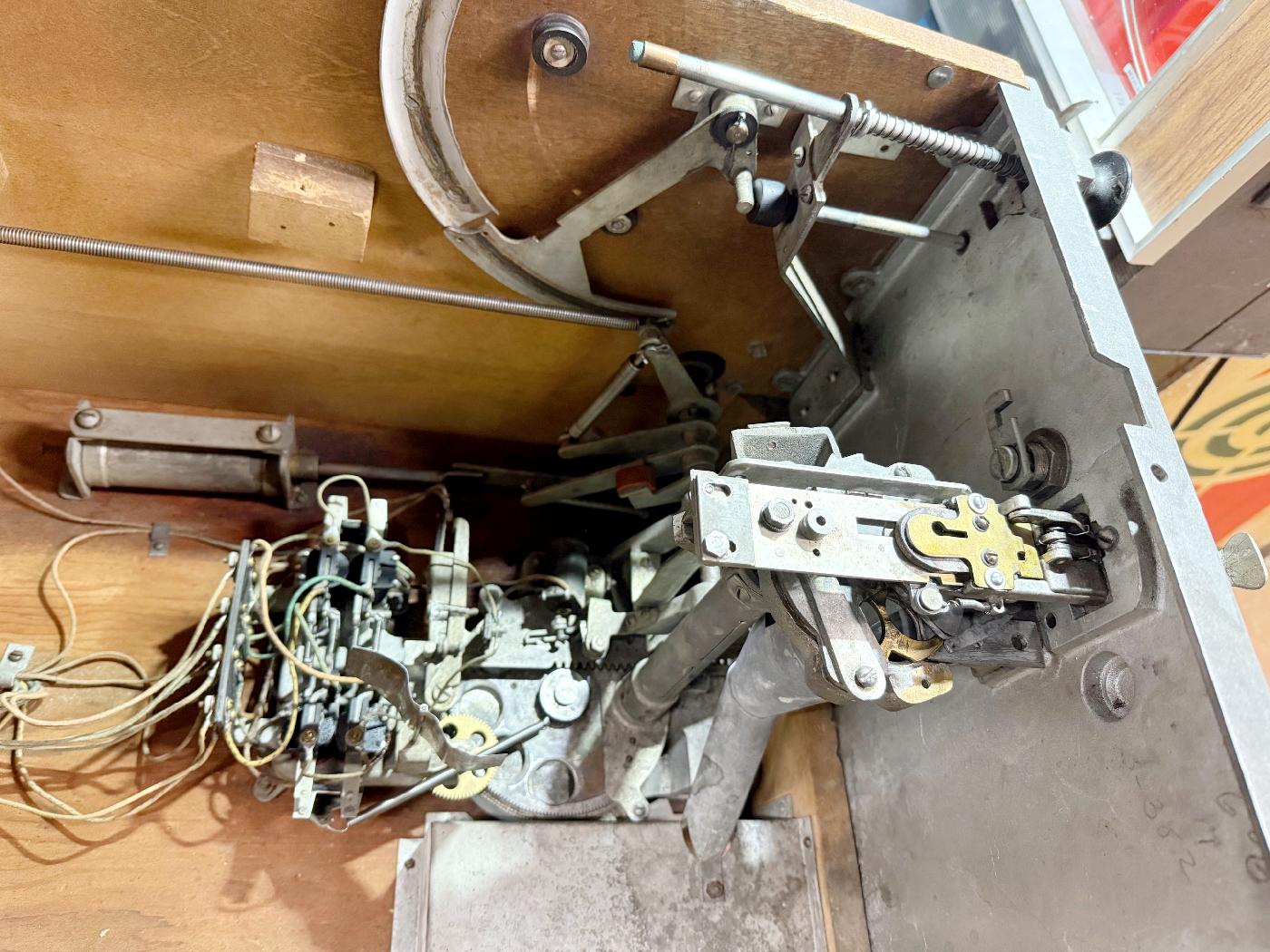
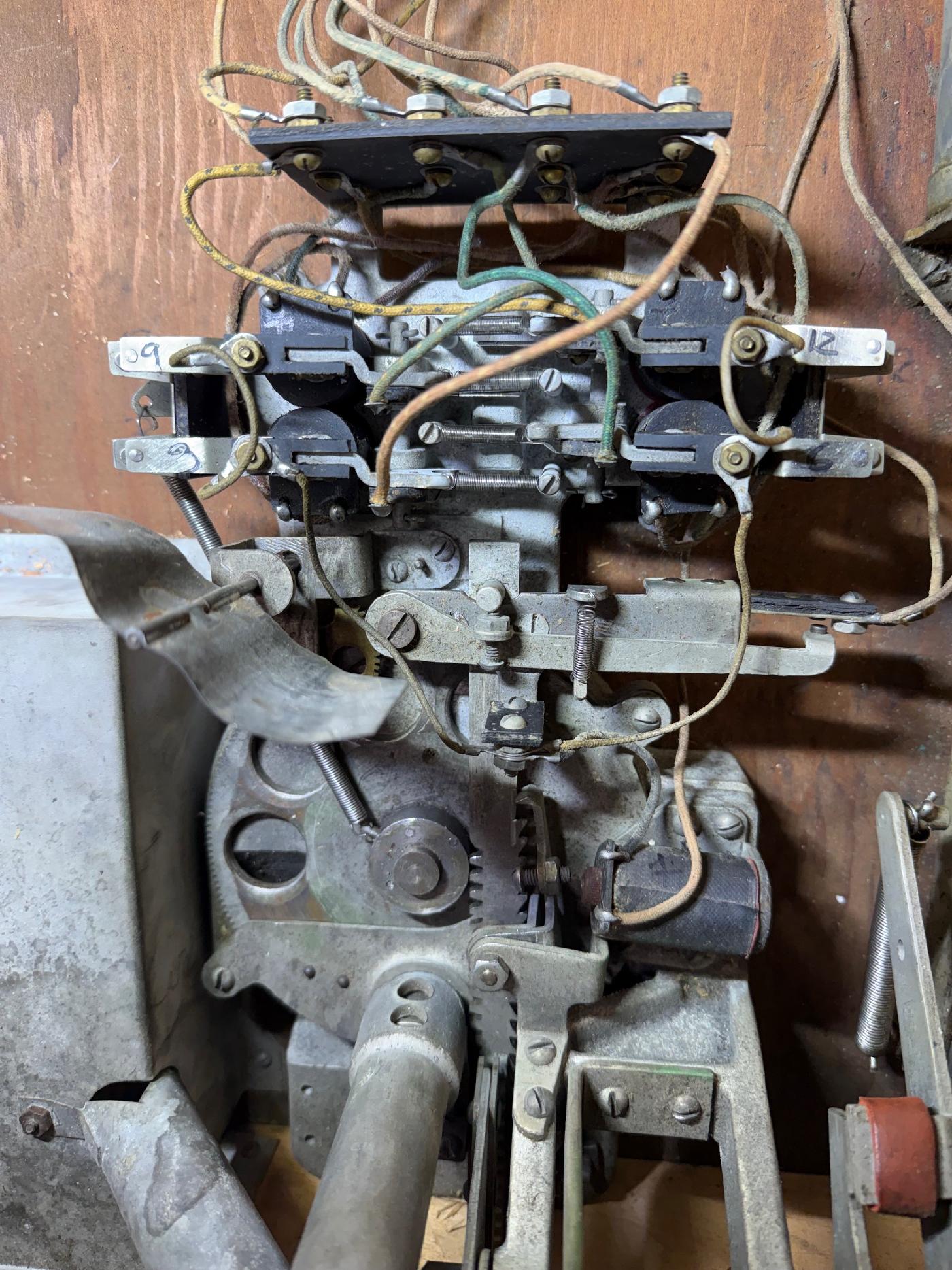
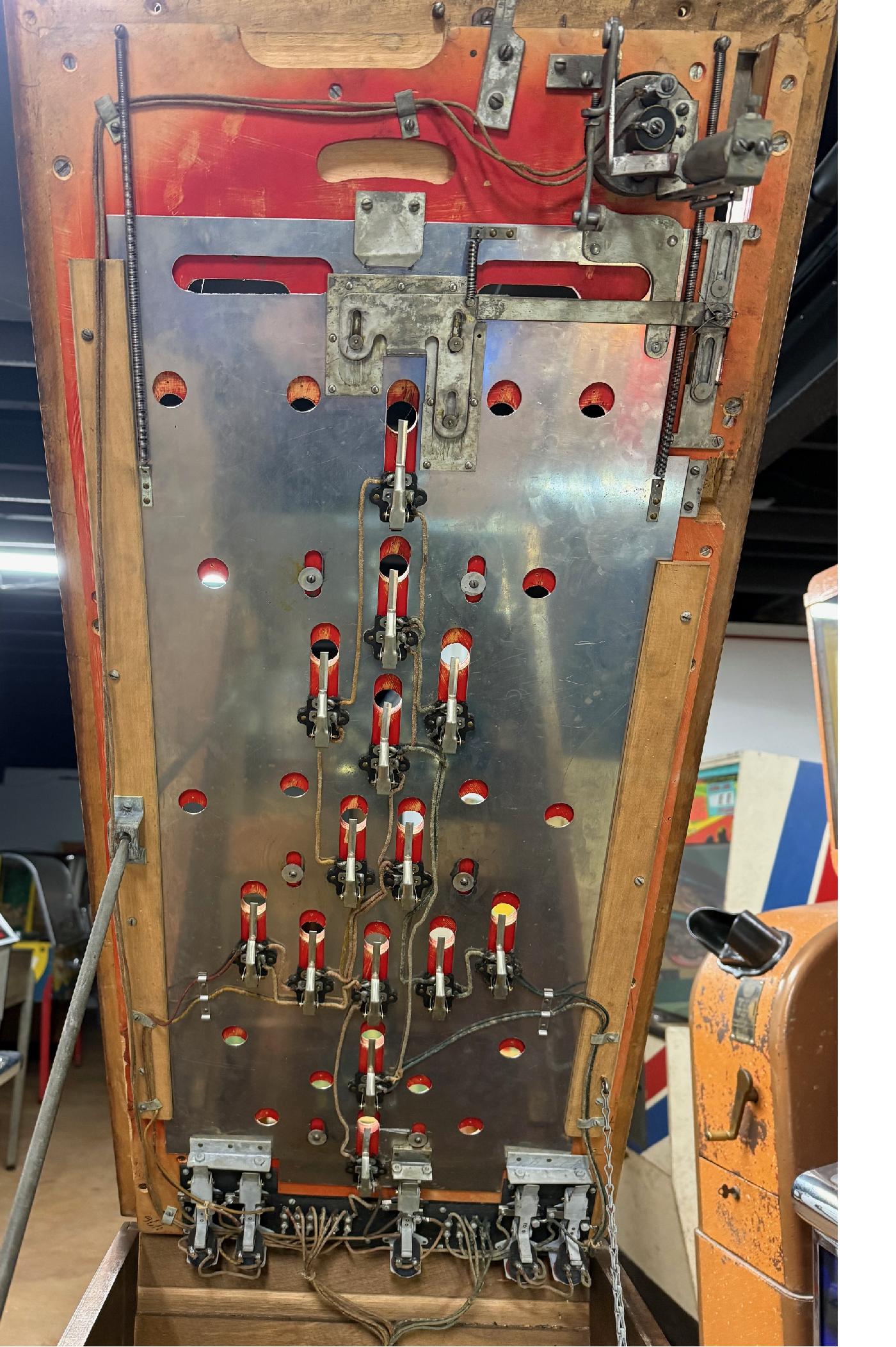
Description: Sportsman, O.D. Jennings, 1934-1936, a slot machine dressed up as a pinball machine. Manufacturer started in 1934, with the cabinet being redesigned in January 1935. The Jennings Sportsman appears to be a pinball machine with a ball shooter, pins on a playfield, and number values underneath the holes. But there is a slot machine lever on the side and a payout tray in the front. The last version of the Jennings Sportsman pinball hade a large cast metal lower arch. This is a nickel game. To receive a payout, the player must get the "skillshot" hole. It's a pretty easy shot from the top of the playfield. Before any payouts can happen, the skill hole shot must be made. This skill shot turns the Sportsman into a skill game, hence removing it from the classification of a gambling game... Kindof... since the remaining shots for the animals (to achieve payout) are pretty random. Any hole with a switch (that is any animal) is the shot to make (after getting the skill shot.) For example the skillshot hole plus two ducks or two squirrels will award three nickels. Three rabbits gets six nickels. Three pheasants awards nine nickels. And three partridges awards twelve nickels. But in any case, no matter what animal holes are achieved, there is no payout without making the skill shot hole too. Since the game is a ten ball game, if the player is good (or very lucky), multiple payouts can be achieved in one game. For example if the player gets the skill hole plus three partridges (using four balls), they can pull the lever and receive 12 coins. But there's more balls to play... In a perfect world the the player just shoots three balls into the pheasant holes, pulls the lever and receives 9 coins. With three balls left, the player now gets the remaining balls into three rabbit holes for yet another 6 coins. That means in a perfect game, the player could get 25 nickels netting $1.25. Which in 1935 would be quite a payout. There is another play caveat though... It is possible to miss being paid for all combinations. For example, if the player gets both the partridge and the pheasant holes before getting the skill hole, the side payout lever will only payout the lesser combination. That is, the partridge reward of 12 coins will not happen (the player will get the pheasant payout of 9 coins.) Therefore it is best to shoot for the skill hole first, and take payouts mid-game to avoid this issue. The game also has additional holes, not associated with any animals, that are non-paying. These are mostly around the top of the playfield. They serve to capture some balls thus reducing winning animal combinations. The tilt is a pedestal style ball, and if the game is tilted, the payout mechanism is disabled. Game uses ten 11/16" balls. The instructions specify glass marbles, but most people use steel balls. The top glass is 36.25" x 15.5" x 3/16" thick. Power supplied from six 1.5 volt dry cell batteries in series, for a total of 9 volts. The manual states voltage from 6 volt to 7.5 volt. But the game does use six 1.5 volt batteries for 9 volts total (though I have heard that some run their game at 12 volts with a modern power supply.) The positive lead of the battery goes to the 10amp fuse mounted on the side wall of the cabinet, and the negative lead goes to the tilt mechanism. Next to the coin payout mechanism are four small relays which control the payout of 3,6,9 or 12 coins. In clockwise order, standing at the front of the game and starting at 1 oclock, the group of four relays payout 12,6,3,9 coins. The manual for the game is fairly extensive. The schematic however is less impressive. Jennings also made a non-payout version of this game in 1935 called Hunter. If you have a Jennings Sportsman pinball/slot machine for sale please email me at cfh@provide.net
|
|
* Email the collector cfh@provide.net * Go to the EM Arcade History index * Go to the Pinball Repair/History index |