|
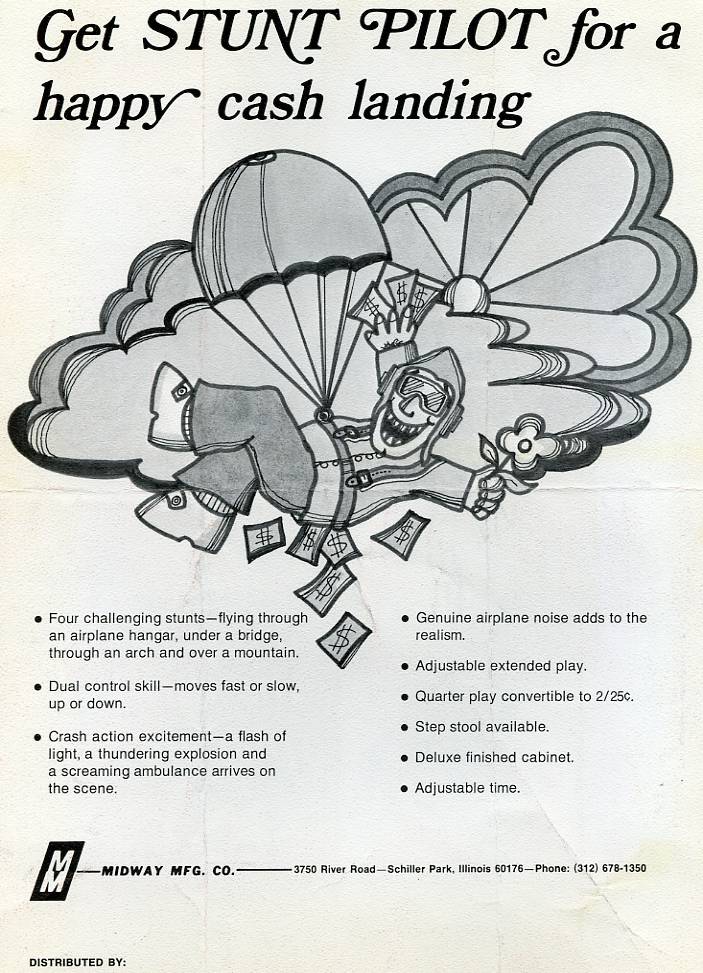
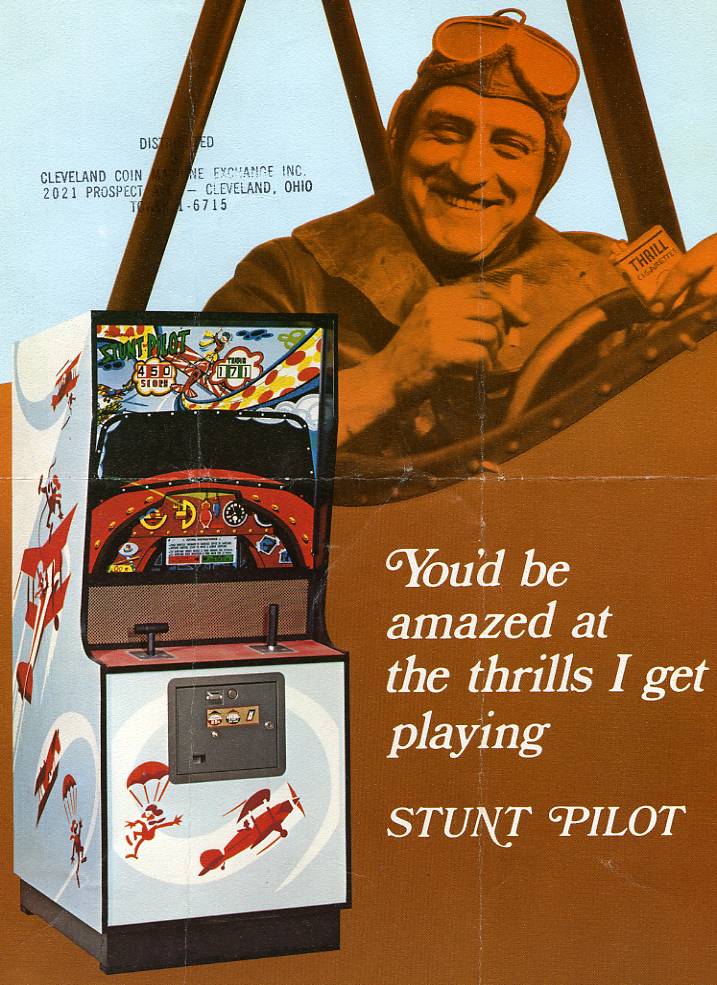
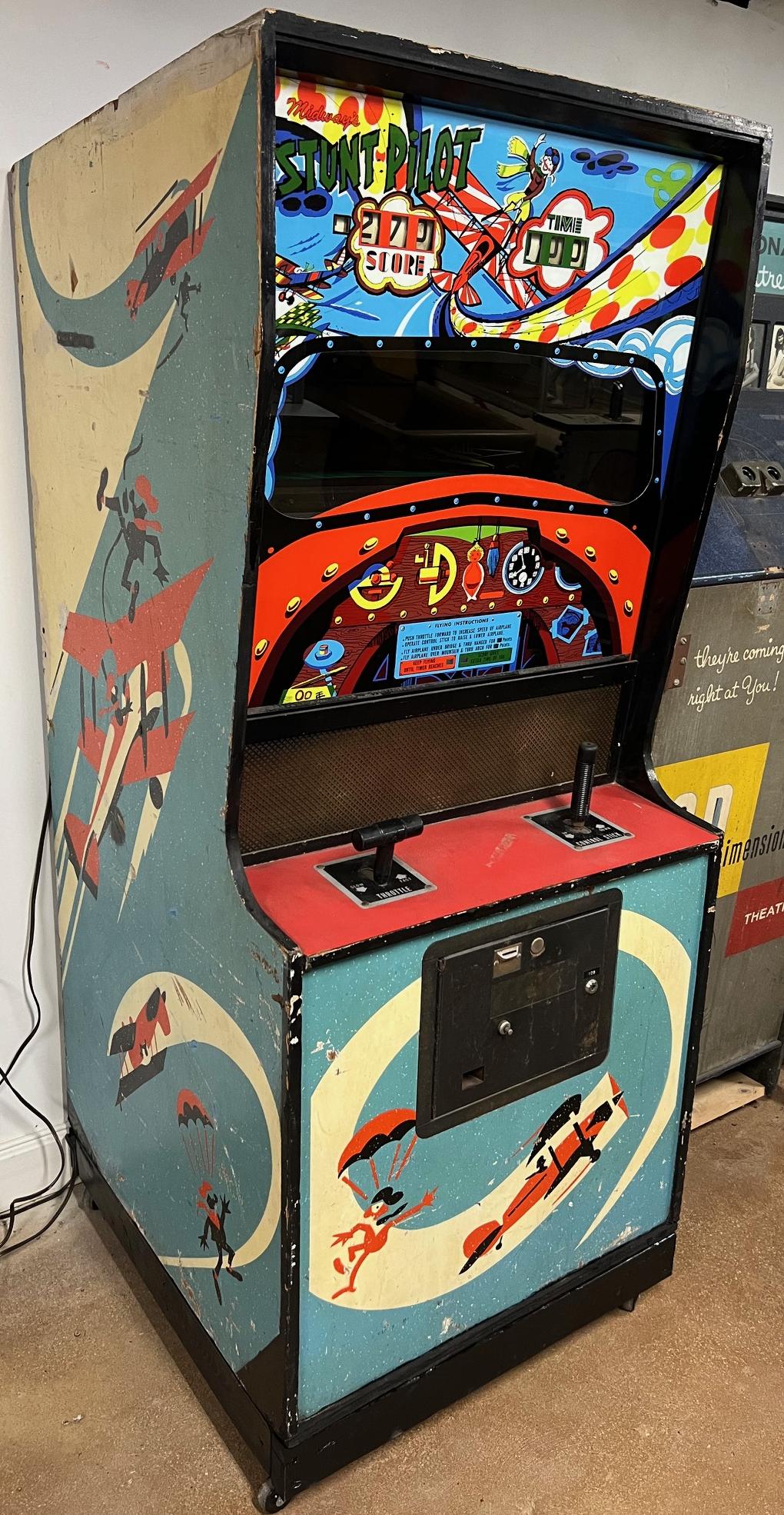
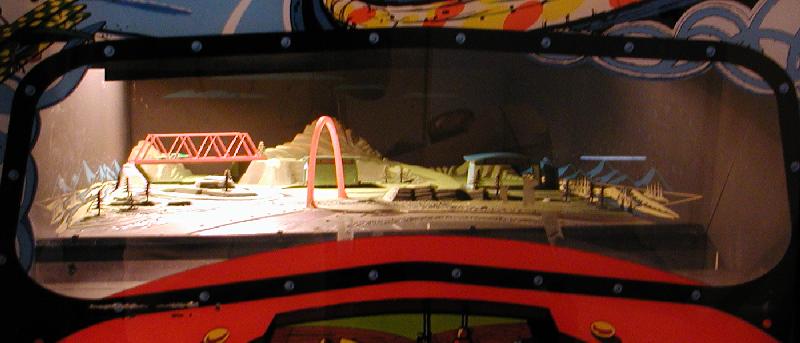
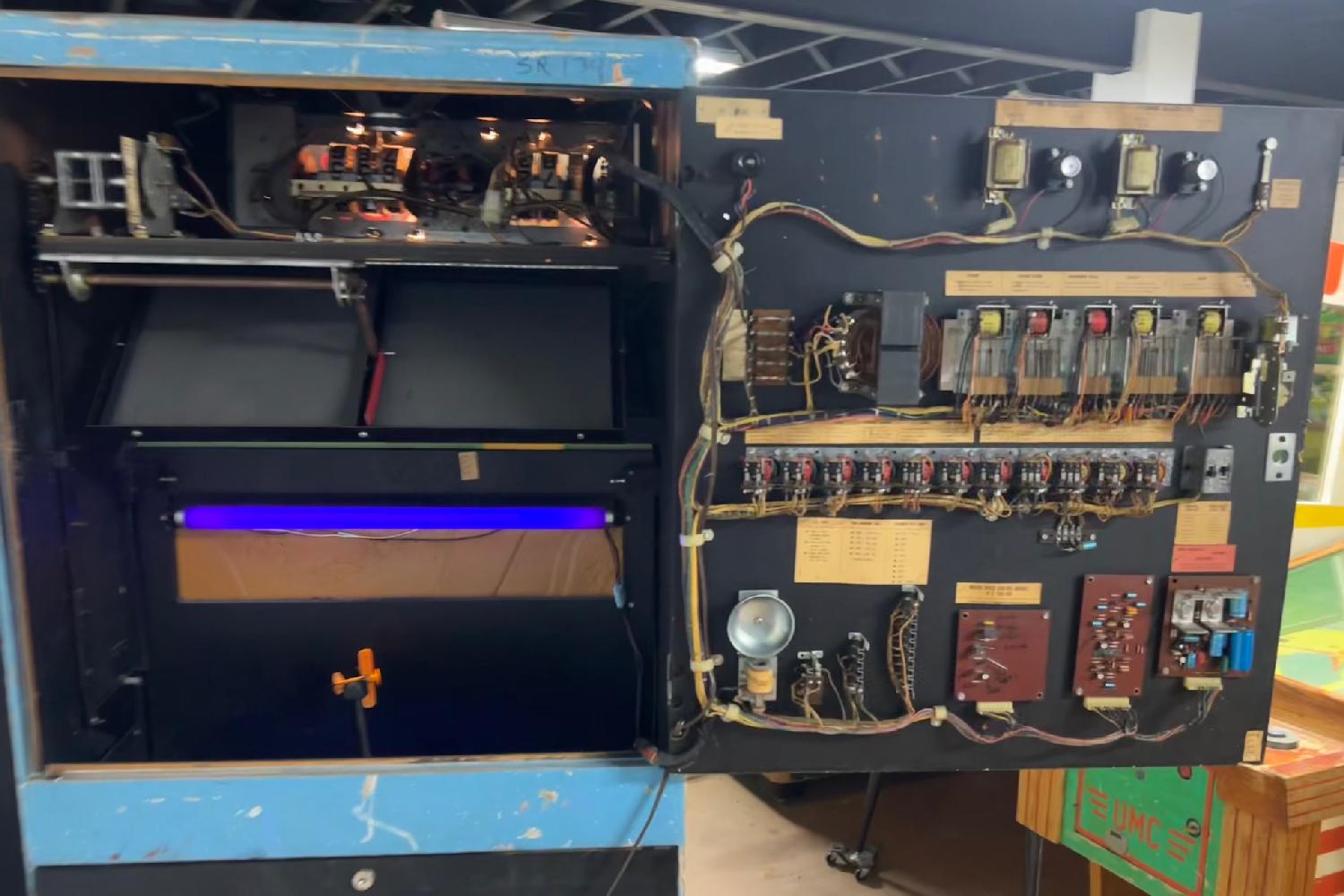
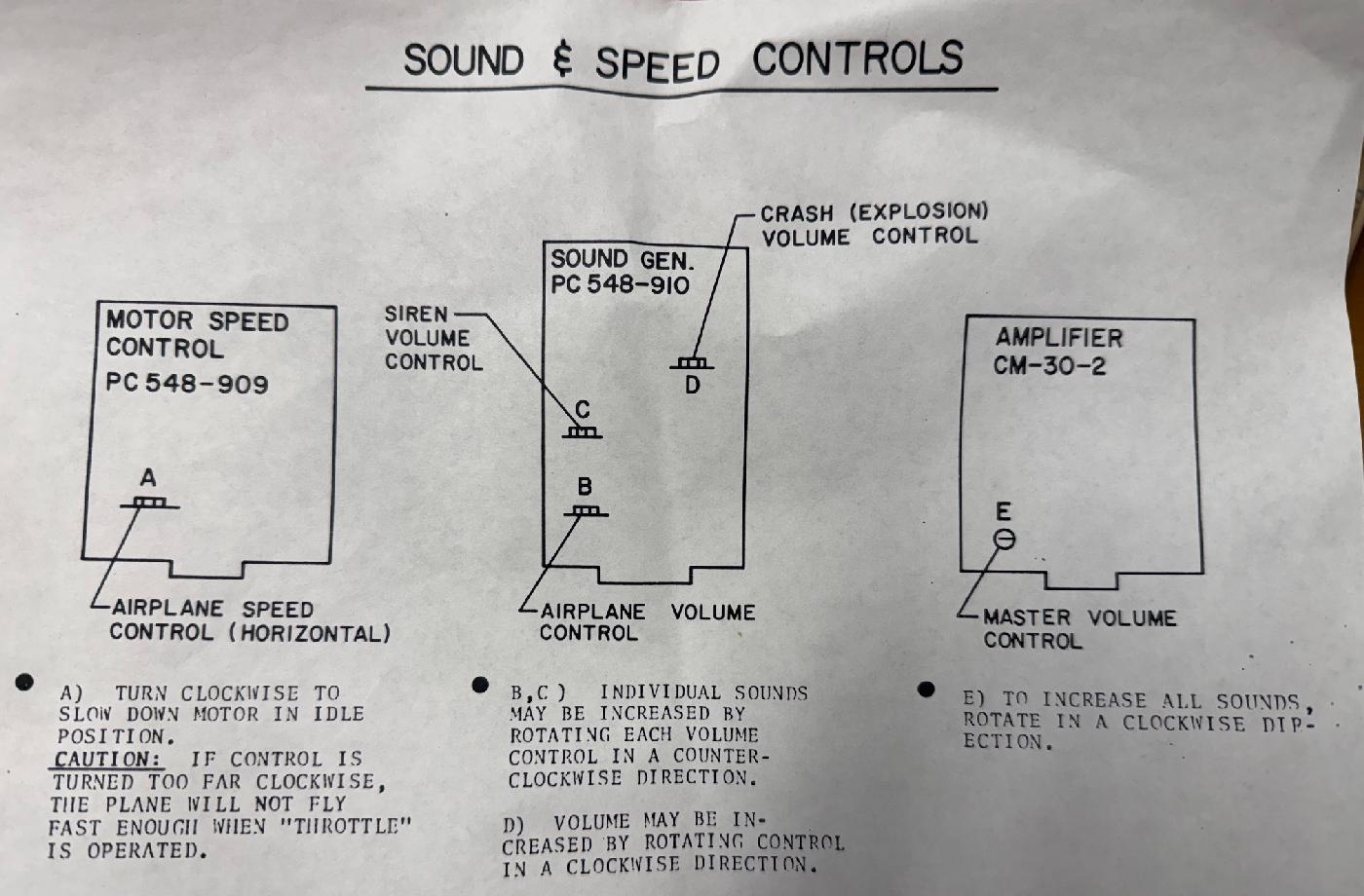
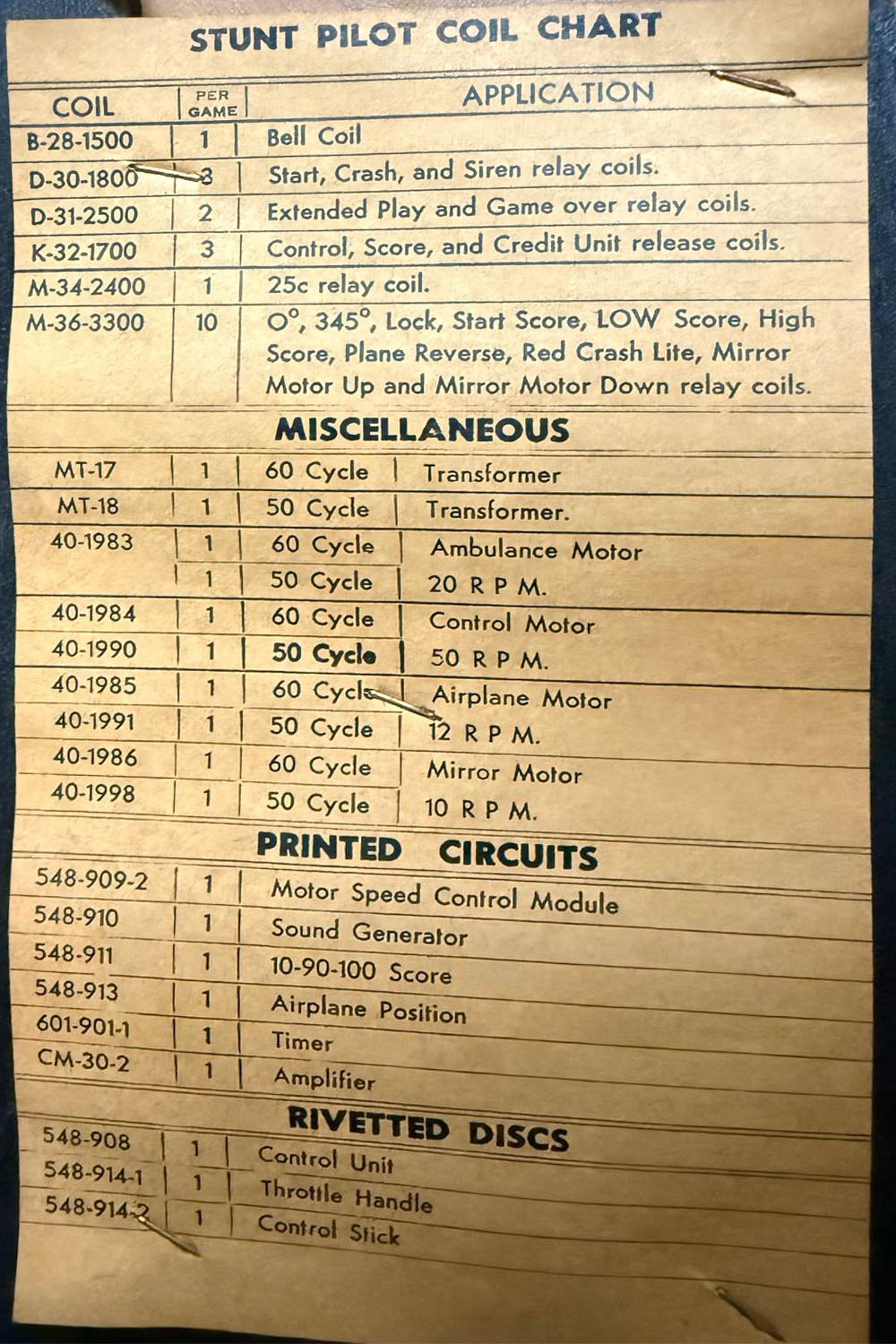
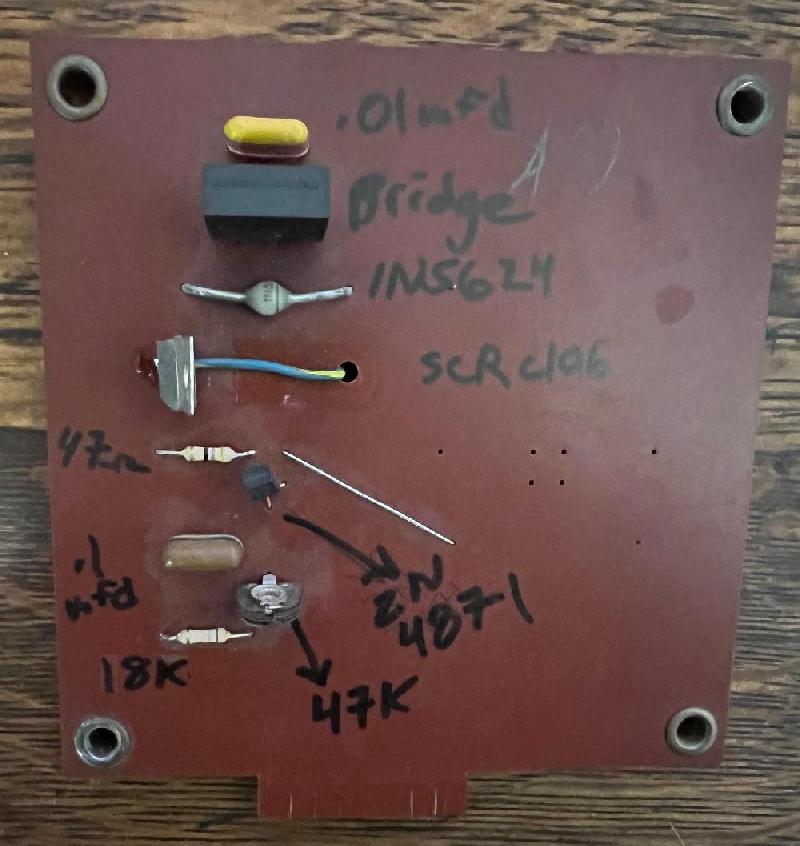
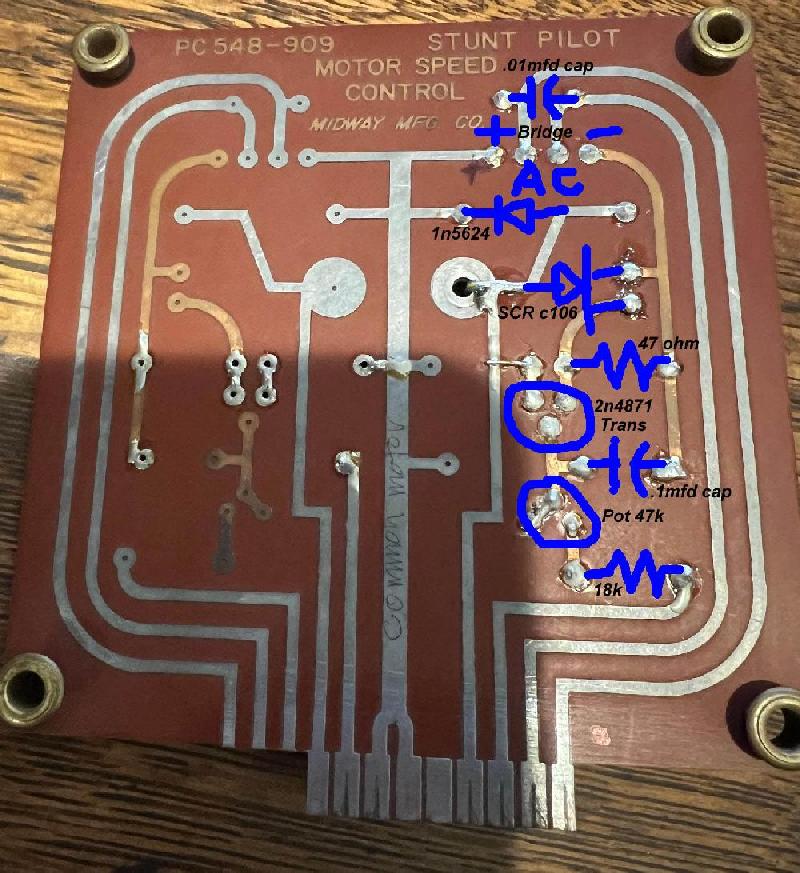
Description: Stunt Pilot, Midway #548, 3/71, electronic sound (plane and siren noise). There is a Bi-Plane that is not visible until the game coins up and the black light turns on. The plane flies in a circle. In order to score points the plane must go over the mountain, under the bridge, thru the arch, and through the hanger. If it crashes, an ambulance comes out of another building, and runs around with the siren on. If you run into the arch, two red 60watt light bulbs turn on. The mountain, bridge and hanger have #55 bulbs which flash if the player crashes into those. Also see Midway's 1971 Sea Rescue, which is a similar game. Player has up and down, and plane speed control. Most people who play it think the plane is a hologram, but it's not. The Bi-Plane is behind a two way Mirror. It spins on a motor with A "wiper" on a board that represents the obstacles. There's two 24" black light bulbs to illuminate the plane and scenery (though I add another 18" black light inside the coin door area, which adds more illumination effect.) There are three circuit boards mounted on the back door. One is the motor speed control for the airplane. Another is a 3-sound board (plane, siren, crash, each sound with its own volume control.) The last board is the sound amplifier (with a master volume control.) The motor speed control board for the plane is a bit of a mystery for this game. The schematics do not match the actual motor speed board. And there's two different versions of the board. Both versions work equally fine so it appears, and are plug compatible. The first generation motor speed board is physically larger. If the motor speed board is completely missing, the game still plays, just the plane is at full speed... which makes the game harder, as it is difficult to get the bridge or hanger and then get high for the mountain, because the plane is running full speed and the climb rate can't get the plane high enough to get over the mountain before crashing. Here's the parts listed in the schematics for the motor control board:
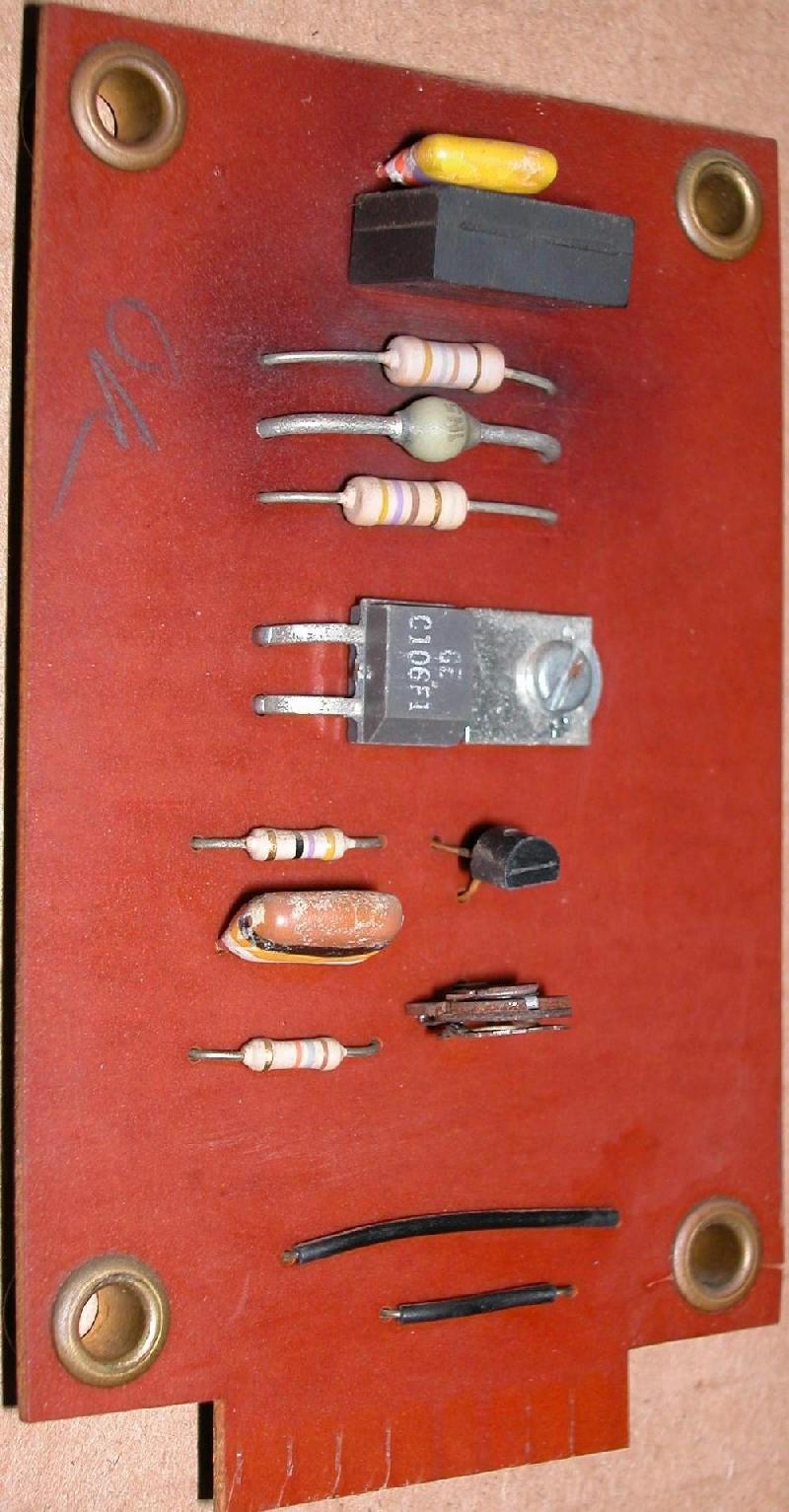
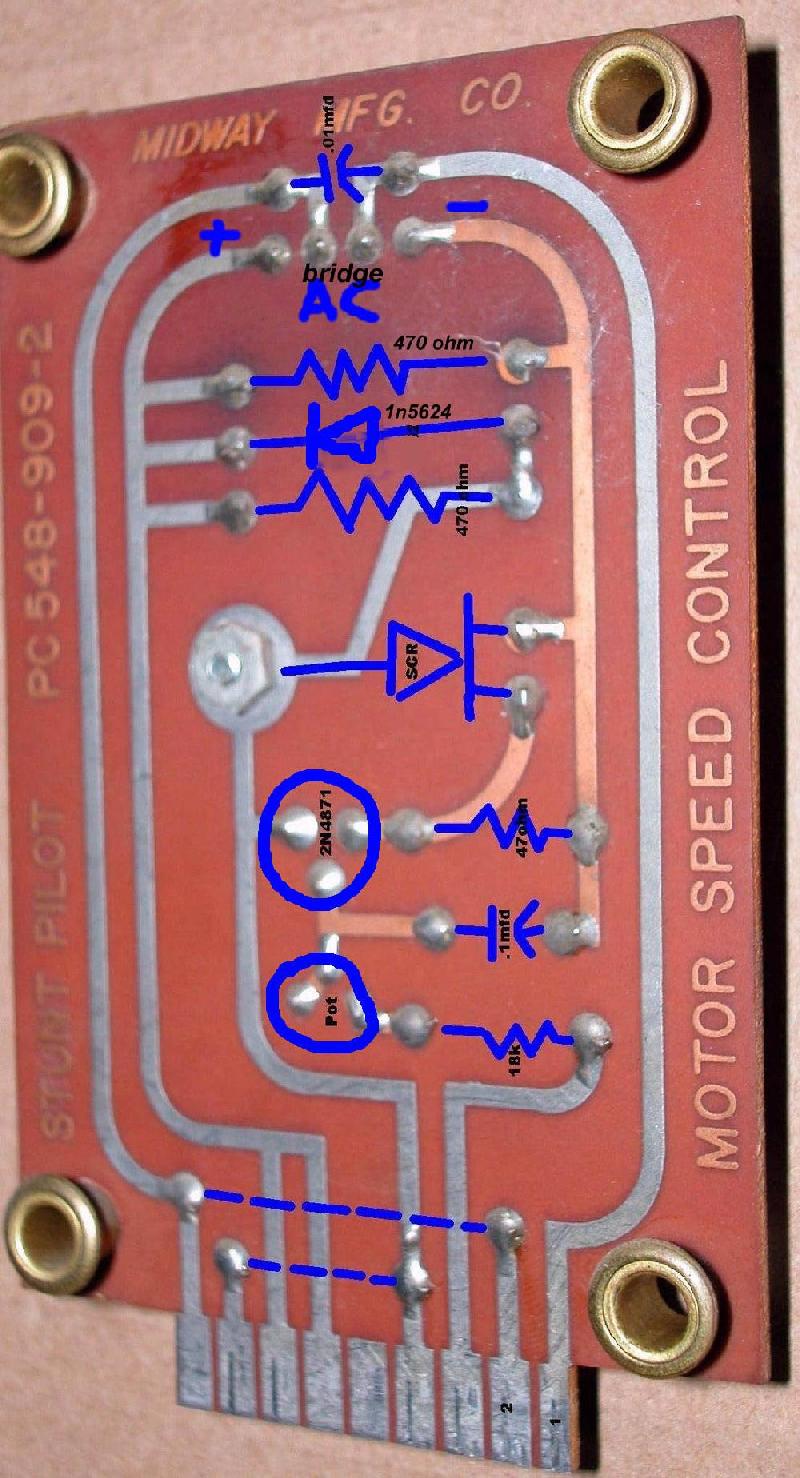
The version2 of the motor speed board adds two 470 ohm 1/2 watt resistors around the 1n5624 rectifying diode, and decreases the trim pot from 47k to 10k. I'm not sure why this change was implemented. Other than those two added resistors/trim pot change, the circuit between ver1 and ver2 motor speed board seems to be the same. And these two boards are pin compatible. Normal operation: with the game on and not playing, the Game Over relay and Mirror Motor Up relay stay energized. As soon as a game is started, both relays de-energize. During game play, manually holding in the Mirror Motor Down relay will move the mirror until the limit switch is hit, then the Mirror Motor Up relay will pull in and move the mirror to the other limit switch is opened (releasing the Mirror Motor Up relay.) When in game over mode, if you physically hold the Mirror Motor Up relay into a non-energized position, and then hold in the Mirror Motor Down relay, the mirror motor will move until the limit switch is opened. Then when you physically release the Mirror Motor Up relay, the mirror motor will reverse until its limit switch opens. This check is handy when diagnosing motor issues, as there are often problems with connectors related to the motors. Note the 50vac mirror motor is actually two motors in one package, allowing for both forward and reverse spin direction. You may download the Midway Stunt Pilot Manual. Please contact me if you have this game for sale at cfh@provide.net
|
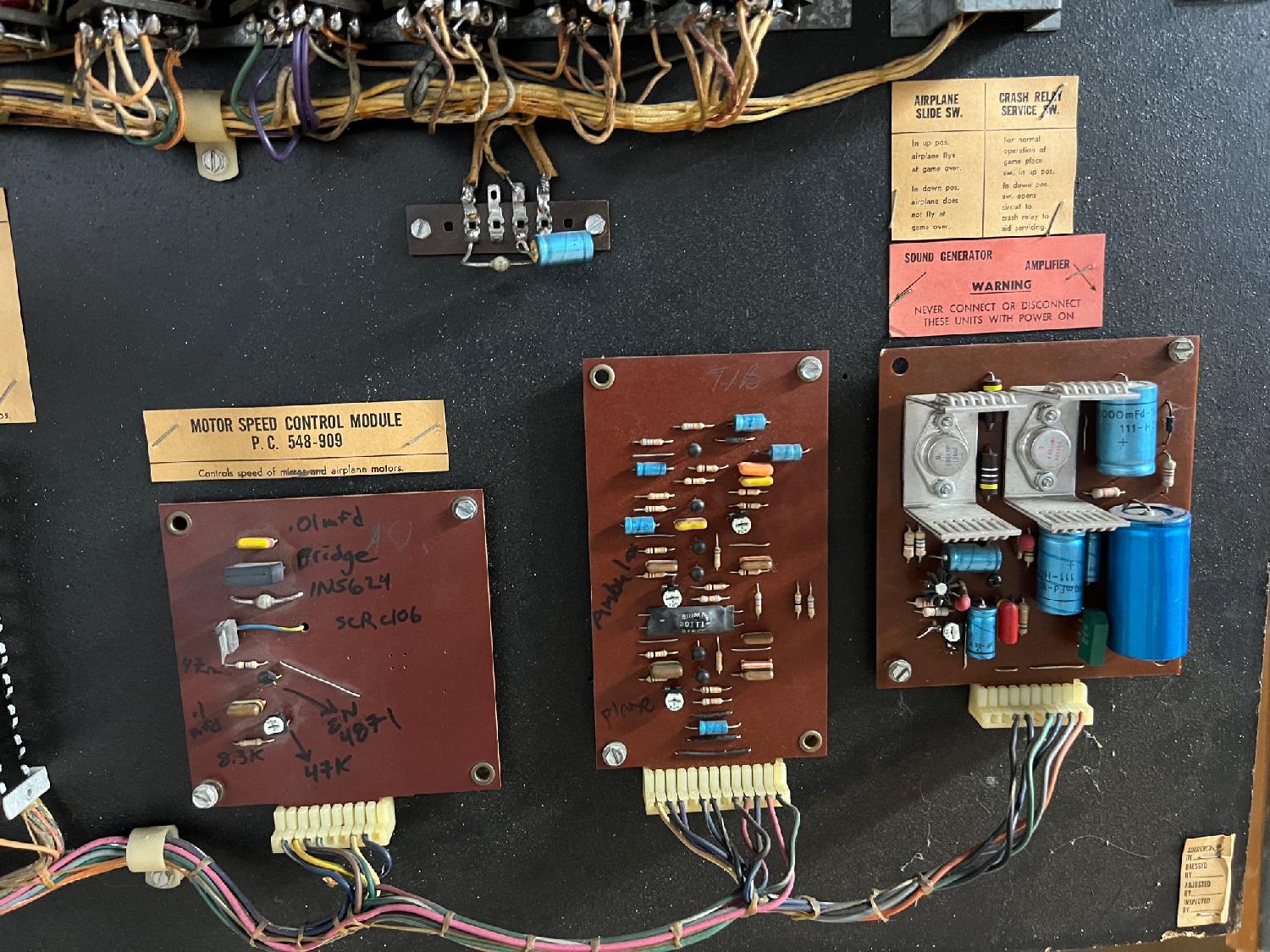
Plane speed control board, version2:
Plane speed control board, version1:
|
* Email the collector cfh@provide.net * Go to the EM Arcade History index * Go to the Pinball Repair/History index |